Roof Soft Washing in Lexington, KY
Roof soft washing in Lexington, KY removes black streaks, algae, lichen, and moss from asphalt shingles and other roofing materials using biodegradable cleaning solution applied at low pressure — never high-pressure washing, which voids most shingle warranties.
Get your free, no-pressure estimate today.
- Low-pressure method aligned with ARMA guidance
- Written quote after a property assessment
- Same-week scheduling on most jobs
Roof soft washing in Lexington, KY removes black streaks, algae, lichen, and moss from asphalt shingles and other roofing materials using biodegradable cleaning solution applied at low pressure — never high-pressure washing, which voids most shingle warranties. Results last two to five years. Free written estimates for all Fayette County homes.
Those Black Streaks Aren’t Dirt — And They’re Eating Your Roof
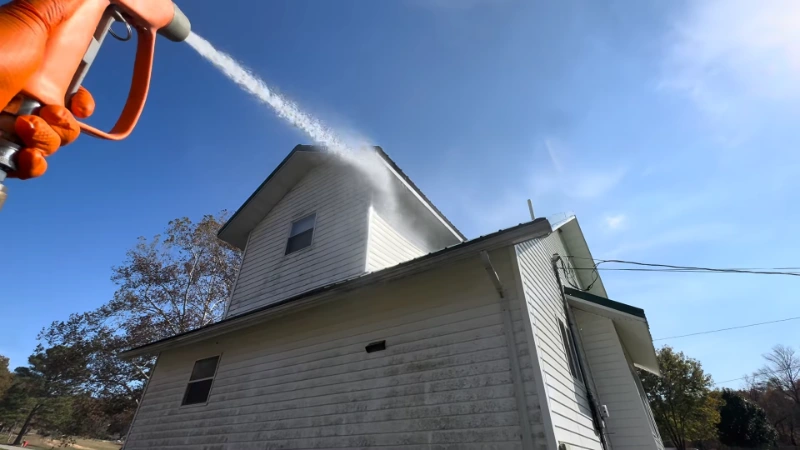
Walk to your driveway and look up. If your roof has dark streaking running down from the ridge, those aren’t stains from pollution or weather. That’s Gloeocapsa magma — a type of cyanobacteria (blue-green algae) that feeds on the limestone filler in your asphalt shingles.
Left untreated, Gloeocapsa magma degrades the granule structure of your shingles over time. The granules are what protect the asphalt substrate from UV radiation. As they loosen and wash away — accelerated by the algae feeding on the limestone binder — your shingles age faster than they should. A 25-year architectural shingle on a neglected roof can reach effective end-of-life in 15–17 years.
This is not a Lexington-specific problem, but Lexington’s climate makes it particularly aggressive here. We sit in a humid subtropical climate zone — Köppen Cfa — with July average highs of 85°F and annual humidity regularly topping 70%. North-facing and low-pitched roof sections that see minimal sunlight stay damp for extended periods after rain. The conditions are essentially perfect for sustained biological colonization.
The lichen is the other story. Lichen is a combined organism — algae and fungus living together — and it roots into roofing materials. If you’re seeing grey or white crusty patches on shingles (common on older Chevy Chase bungalows, Kenwick homes from the 1950s, and anything surrounded by mature tree canopy), that’s lichen. Lichen doesn’t just sit on the surface — it physically penetrates the shingle material through root structures called holdfasts. High-pressure washing tears those holdfasts out along with the shingles. Soft washing kills the lichen biology; the organism releases and falls off over days to weeks.
Why Soft Washing — Not Pressure Washing — Is the Only Safe Method for Roofs
Here’s the problem with pressure washing a roof: at the PSI levels needed to actually blast off biological growth, you’re stripping granules from asphalt shingles. Manufacturers know this. ARMA (the Asphalt Roofing Manufacturers Association) explicitly recommends low-pressure washing only for asphalt shingles. Using a pressure washer above 100 PSI on most shingle types — which is any detectable pressure from a standard wand — accelerates granule loss and can void your manufacturer’s warranty in a single afternoon. Many homeowners pair this with solar panel cleaning so the whole exterior is cleaned in one visit.
We use soft washing for every roof we clean. The process:
Inspection and solution mixing
Before we touch the roof, we walk the property and assess the coverage. We’re looking at pitch, shingle type, biological loading, the degree of lichen penetration, and whether there are any vulnerable areas — skylights, ridge vents, antenna mounts, gutters we need to protect during rinse. We mix sodium hypochlorite solution at the appropriate concentration for the biology we’re dealing with. Moss and lichen need a higher concentration and longer dwell than surface algae.
Low-pressure application from the ground or eave level
We apply the cleaning solution at low pressure — typically 100 PSI or less — using soft wash nozzles designed to deliver coverage without impact force. For most single-story and two-story Lexington homes we can treat the roof from the eave level or with extension equipment, minimizing foot traffic on the shingles.
Dwell time
This is where the work happens. The sodium hypochlorite solution needs time to penetrate the biological growth and kill it at the cellular level. Surface algae may only need 10–15 minutes. Heavy lichen requires longer — sometimes 20–30 minutes — with possible re-application. Rushing this step produces poor results. We stay on the job until the dwell time is complete.
Low-pressure rinse
We rinse thoroughly at low pressure to remove dead biological matter. What you see leaving the roof is killed algae, neutralized mold spores, and dead lichen. The shingles themselves are not disturbed.
Post-treatment monitoring
We’ll let you know what to expect over the following days. For heavy lichen jobs, the dead lichen may still look grey or white on the roof for 5–14 days as it dries and naturally detaches through rain and wind. This is not a service failure — it’s how properly treated lichen exits the roof. Within two to four weeks, the roof should be uniformly clean.
What Roof Types Can We Soft Wash?
Asphalt shingles
The most common roofing material in Lexington, covering the majority of homes in Hamburg, Beaumont, Masterson Station, and most of the post-1990 builds across Fayette County. Soft washing is safe and effective. Never pressure wash.
Wood shake and wood shingles
Found on many older homes in the historic neighborhoods. Wood is porous and holds moisture; moss and lichen colonize aggressively. Soft washing is gentler than pressure washing and appropriate chemistry is essential — the wrong surfactant concentration on wood can cause premature aging. We adjust our mix accordingly.
Metal roofing
Standing seam and corrugated metal roofs don’t support the same biology as shingles (they don’t have limestone filler), but they do accumulate algae and moss, particularly in shade. Low-pressure soft washing works well on metal. We ensure no pooling in seams.
Tile roofing
Less common in Lexington but found on some higher-end properties in Idle Hour and Deerfield. Tile is fragile under high-pressure and should always be soft washed. The biology on tile is similar to asphalt: algae and lichen primarily.
Flat roofing (TPO/EPDM)
We treat low-slope and flat roofs selectively. Some membrane materials have restrictions on chemical exposure. We confirm compatibility before proceeding on any flat or low-slope application.
Why Lexington Roofs Are Particularly Vulnerable
Three factors combine in Lexington that make roof algae and lichen growth faster and more aggressive than in many other parts of the country:
Climate
Humid subtropical conditions with consistent warmth and moisture mean biological growth rarely goes fully dormant. The window of active growth is longer here than in genuinely cold climates.
Tree canopy
Lexington’s older neighborhoods — Kenwick, Chevy Chase, Ashland Park, the corridors near the University of Kentucky campus — have mature hardwood canopy. Oak, maple, and Bradford pear trees shade roof sections for large portions of the day. Shaded roof sections dry more slowly and stay at temperatures favorable to algae and lichen growth for longer.
Direction
North and northeast-facing roof slopes get the least direct sun. In Lexington’s older Craftsman and colonial homes, these sections can stay damp for 36–48 hours after a rain event. The growth on these sections is typically 2–3x heavier than south-facing slopes of the same roof.
If you notice that only part of your roof has streaking or discoloration, check which direction that slope faces. It’s almost always the north side.
How Long Do Roof Soft Wash Results Last?
Properly treated roofs in Lexington typically remain clean for two to four years. Several factors affect the timeline:
- Tree canopy overhead — heavy shade shortens the clean cycle
- Roof pitch — lower-pitched roofs hold moisture and debris longer
- Proximity to other vegetation — spores from trees and neighboring structures can re-colonize
- Initial biological loading — a heavily infested roof that required aggressive treatment may show some regrowth sooner than a lightly affected one
Homeowners preparing to sell — a common driver in Lexington’s active real estate market — often schedule a soft wash specifically for curb appeal before listing. At Lexington’s median home value of $333,000, a $400–600 roof cleaning that makes the home look well-maintained from the curb is one of the best-ROI exterior improvements you can make before photos are taken.
How Much Does Roof Soft Washing Cost in Lexington, KY?
Roof soft washing in Lexington typically runs between $350 and $800 depending on:
- Roof size and pitch — larger roofs and steeper pitches take longer and require more solution
- Biological loading — a lightly affected roof costs less than one with years of accumulated lichen
- Roof type — standard asphalt is the benchmark; wood shake and tile require adjusted technique
- Access complexity — multiple valleys, dormers, skylights, and add-ons affect setup time
What About Those Zinc Strips I’ve Heard About?
Zinc strips installed at the ridge can help slow the return of algae growth after a soft wash. As rain hits the zinc, it releases zinc ions that run down the slope and inhibit algae growth. They’re not a replacement for cleaning — they won’t address existing growth — but as a preventative measure on a freshly cleaned roof they can extend the clean cycle.
We can discuss zinc strip installation as an add-on to a soft wash job. Not every roof or homeowner needs them, and they’re more effective on shorter-pitched roofs where runoff covers more of the slope. It’s worth asking about if your roof is under heavy tree canopy and you’ve had to clean it every two to three years.
Signs Your Roof Needs Soft Washing
You shouldn’t wait until the whole roof is black. Watch for:
- Black or dark grey streaks running from ridge toward the eave — especially on north-facing slopes
- Green or yellow-green fuzzy patches in shaded areas — that’s moss
- White or light grey crusty patches — that’s lichen, and the more of it you see, the more important it is to treat it promptly before holdfasts deepen
- A roof that looks “blotchy” or uneven in color across different sections
- A generally darkened appearance compared to neighboring homes that were built around the same time
- Granules washing off in higher-than-normal quantities (check downspout discharge areas — dark granules accumulating at the base of downspouts can indicate accelerated shingle wear from biological activity)
For more background, read our guide on how algae, mold, and mildew differ on Lexington homes.
Frequently Asked Questions
Warranty, safety, and timing questions Lexington homeowners ask about roof cleaning.
Still have a question?
Call or text and we will answer it straight, no pressure.
Call or Text: (859) 445-2910Will soft washing void my roof warranty?
No — soft washing is what preserves your warranty. ARMA (the Asphalt Roofing Manufacturers Association) recommends low-pressure washing only for asphalt shingles. High-pressure washing is what voids most warranties by stripping granules. Our soft wash method operates at 100 PSI or less on shingle surfaces, well within safe parameters for all major shingle manufacturers.
What are the black streaks on my roof?
The black streaks on asphalt roofs are almost always Gloeocapsa magma, a blue-green algae (cyanobacteria) that feeds on the limestone filler in asphalt shingles. It spreads via airborne spores and grows in the dark, damp conditions common on north-facing and shaded roof sections. It is not cosmetic only — left untreated, it accelerates granule loss and shortens shingle lifespan.
Can I use a power washer on my roof to save money?
We strongly recommend against it. Consumer-grade pressure washers typically operate at 1,500–3,000 PSI — far above the threshold that damages asphalt shingles. At those pressures, you’ll strip granules, potentially force water under shingles, and may void your manufacturer’s warranty. What looks like a thorough cleaning often causes more damage than the original biology. Soft washing at low pressure with proper chemistry is safer, more effective, and produces results that last significantly longer.
How long does roof soft washing take?
Most Lexington residential roofs take 2–4 hours for a complete soft wash treatment, including setup, application, dwell time, and rinse. Larger roofs or those with heavy lichen loading may take longer. We’ll give you a time estimate when we quote the job.
Is the cleaning solution safe for my gutters, landscaping, and downspouts?
We pre-rinse landscaping around the foundation before applying solution, and rinse it thoroughly after the job. The sodium hypochlorite solution we use is diluted to safe working concentrations. We’ve treated hundreds of roofs in Lexington’s tree-canopy neighborhoods without damage to the surrounding vegetation from proper application and rinsing technique.
Will the roof look clean immediately after the wash?
Most of the visual improvement is visible within hours of the rinse. However, lichen takes additional time — 5 to 14 days in most cases — to fully release as the dead organism dries and detaches. The roof will not look 100% clean immediately if heavy lichen is present. This is normal and expected. By 2–4 weeks after treatment, the roof should be uniformly clean.
Do I need to be home when you clean the roof?
No. We just need access to the property perimeter and a water source. We’ll confirm access details when scheduling and note any areas of concern you flag in advance.
How often does a Lexington roof need to be soft washed?
In Lexington’s climate, most roofs under moderate tree canopy need soft washing every 2–4 years. Roofs with heavy overhead shading or significant north-facing exposure may need attention every 1–2 years. If you’re on an annual or biannual schedule, light surface algae is quicker and cheaper to treat than a heavily infested roof that’s been neglected for 5+ years.
We Serve All of Lexington-Fayette and Central Kentucky
We clean roofs throughout Fayette County and beyond, including:
Neighborhoods
Surrounding areas
ZIP codes served
Our crews soft wash roofs across Lexington, including Hartland homes and Wellington homes.
Ready for a Clean Roof?
If you’re seeing black streaks, green moss, or crusty grey lichen on your shingles — or if your roof just looks dull and discolored compared to how it looked a few years ago — give us a call. We’ll come out, assess what we’re dealing with, and give you a straight written quote.
Free written estimates. Same-week scheduling on most jobs. We show up when we say we will.