Driveway & Concrete Cleaning in Lexington, KY
Professional driveway and concrete cleaning in Lexington, KY removes oil stains, tire marks, black algae, mildew, and years of built-up grime from concrete, pavers, and asphalt surfaces.
Get your free, no-pressure estimate today.
- Commercial surface cleaners, no zebra stripes
- Honest oil-stain assessment before we start
- Written quote before work begins
Professional driveway and concrete cleaning in Lexington, KY removes oil stains, tire marks, black algae, mildew, and years of built-up grime from concrete, pavers, and asphalt surfaces. We use commercial surface cleaners and hot water extraction for even, streak-free results — no zebra stripes. Free written estimates throughout Fayette County.
Your Driveway Tells People More Than You Think
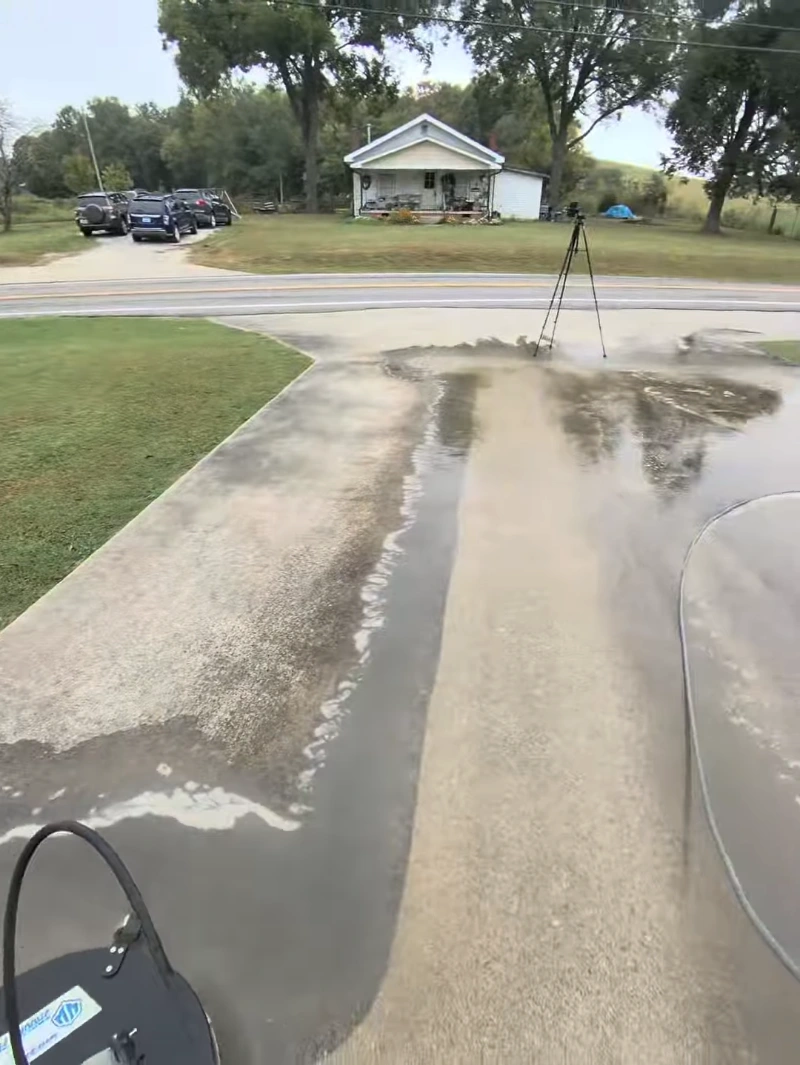
The driveway is the first thing a visitor — or a buyer — sees before they even reach the front door. And concrete is unforgiving. It holds stains, tracks biological growth in every small pit and crack, and ages visually faster than most exterior surfaces because it’s horizontal and takes the full brunt of weather, vehicles, and foot traffic.
If your driveway has gone from white-grey to dark grey-brown, if you’ve got black streaks running across the concrete from the apron down toward the street, or if there are oil spots sitting in roughly the same place your car parks every day — that’s recoverable. What you’re looking at after a proper cleaning is usually a surface that looks two or three shades lighter, with a texture that’s genuinely clean rather than just surface-damp.
What won’t recover: deep oil staining that’s been untreated for years, unsealed concrete that’s absorbed significant vehicle fluids, or spalling concrete where freeze-thaw cycles have already compromised the surface integrity. We’ll be straight with you about what we can and can’t fix before we quote the job.
The Problem With DIY Driveway Cleaning
Walk into any hardware store and you can rent a pressure washer for an afternoon. Plenty of Lexington homeowners do it every spring, and plenty of them end up with a driveway that looks worse than when they started.
Here’s why:
Zebra stripes
A consumer pressure washer with a standard wand and a 15° or 25° nozzle cleans a 2–4 inch strip. Move it in overlapping passes across a driveway and you get slightly overlapping clean strips with slightly darker uncleaned strips between them — visible as lighter and darker bands across the slab. The pattern is especially noticeable at an angle in the sunlight. This is probably the most common DIY result we see, and it comes from using a wand instead of a surface cleaner.
Inconsistent pressure
Maintaining consistent distance and speed across a 500 square foot driveway by hand is genuinely difficult. The result is splotchy cleaning — some areas treated more heavily than others, some light areas that weren’t fully reached.
Wrong tip, wrong surface
A 0° or 15° nozzle on concrete can etch the surface if held too close. We’ve seen driveways in Hamburg and Beaumont with visible wand marks — white etching patterns — from an overly aggressive home cleaning attempt. That damage is permanent.
No pre-treatment
Most DIY approaches skip chemical pre-treatment entirely. Surface cleaning without chemistry just moves dirt around and doesn’t address the biology (algae, mold, mildew) or the oil.
We use commercial rotary surface cleaners — spinning heads that deliver consistent, even pressure across a wide path simultaneously. The result is uniform cleaning with no stripe pattern.
How We Clean Lexington Driveways and Concrete
Pre-treatment
We apply a biodegradable degreaser/cleaning solution to the surface before any pressure is applied. For oil stains, the pre-treatment is targeted — we apply a concentrated degreaser and allow dwell time before the main cleaning pass. For biological growth (algae, mildew, black streaks), we apply a low-concentration cleaning solution similar to what we use on exterior surfaces. Pre-treatment is not optional. It’s what lifts organic matter and softens built-up grime so the pressure cleaning removes it rather than just pushing it sideways.
Surface cleaning with commercial equipment
We clean with a rotary surface cleaner — typically 18″–20″ spinning heads — that delivers even, consistent cleaning across the full width of the head in a single pass. No wand striping. For large flat surfaces like driveways and parking areas, the surface cleaner is significantly faster than a wand and produces a uniform result. For edges, borders, and areas the surface cleaner can’t reach, we use a wand with appropriate technique.
Post-rinse and detail work
After the main cleaning pass, we rinse thoroughly and address any remaining spots — persistent oil staining, edges at the garage apron, the transition strip where the driveway meets the sidewalk. We also rinse out the gutter apron at the street end, where biological growth and debris tend to collect.
Optional sealant application
Concrete sealing after cleaning is an optional add-on that slows the return of biological growth and makes the surface easier to maintain. A properly sealed driveway repels oil better, resists freeze-thaw staining, and maintains its clean appearance significantly longer than an unsealed surface. We discuss this option when we quote the job — not every driveway needs it, but for concrete that’s been freshly cleaned and in good structural condition, it’s often worth the additional cost.
What Surfaces We Clean
Concrete driveways
The most common surface in Lexington. Single-car, two-car, circular drives — all standard work. We clean them all with commercial surface cleaning equipment for uniform, stripe-free results.
Asphalt driveways
Asphalt requires a different approach than concrete. We use lower pressure and appropriate chemistry — no harsh solvents that degrade the asphalt binder. Oil stain removal on asphalt is more limited than on concrete because of how asphalt absorbs petroleum-based fluids.
Concrete patios
Covered and open patios accumulate mold and mildew much faster than driveways because they’re often shaded and near vegetation. Black mold on a concrete patio — that dark biological carpet on the surface — is a soft wash + surface cleaning job. We address it the same way we address it on house exteriors: chemistry first, then cleaning.
Pavers and brick
Lexington has a lot of paver driveways and walkways, particularly in higher-end new builds in Deerfield and older properties in Chevy Chase. Pavers require extra care — high pressure dislodges the sand in the joints. We use appropriate pressure levels and rinse in the direction of the joint lines to minimize sand loss.
Sidewalks and walkways
High foot traffic areas. Concrete walkways accumulate more biological growth than driveways because foot traffic tracks in organic matter. We clean them with the same equipment and approach as driveways.
Garage floors
Interior and apron surfaces. These are typically the highest oil-staining concentration on a property. Pre-treatment with degreaser is essential. We’ll be honest if staining is too deep-set for our process to fully address.
Pool surrounds
Concrete and paver pool decks in Lexington’s spring and summer season accumulate green algae from water splash and surrounding vegetation. Pool decks require attention to drainage and runoff to prevent cleaning solution from reaching pool water.
Walkways, Patios & Exposed Aggregate
The same surface-cleaner method works on walkways, sidewalks, and patio slabs around your home, and we usually clean them in the same visit as the driveway. Pool decks and covered patios need different chemistry and extra care, so they have their own page: see our patio and pool deck cleaning.
Exposed aggregate is the exception. Standard pressure washing can loosen the stones and strip the sealed surface, so we adjust pressure and technique for it. Our exposed aggregate concrete guide explains what goes wrong and how we avoid it.
Oil Stains: What We Can (and Can’t) Fix
Oil staining on concrete is a spectrum. Here’s how to think about it:
Fresh or recent staining (1–12 months old)
Highest chance of significant improvement. The oil hasn’t fully polymerized into the concrete substrate. Pre-treatment with appropriate degreaser and hot water pressure cleaning can lift most of the visible staining. The surface may not return to perfectly white, but the improvement is usually dramatic.
Older staining (1–5 years, regularly exposed to weathering)
Partial improvement is realistic. The outer layers of contamination lift; the deeper staining that has cured into the concrete is harder to address. We’ll give you an honest assessment during the quote.
Long-term staining on unsealed concrete
Expect improvement, not perfection. Concrete is porous. Oil that’s been in an unsealed slab for years has penetrated the full depth of the surface layer. We can lift the surface contamination and significantly improve appearance, but we cannot guarantee full removal of deep-set staining. We’ll tell you that before we start.
Lexington-Specific Factors for Concrete Surfaces
Freeze-thaw cycles
Lexington’s winters aren’t consistently brutal, but we do get hard freezes. Freeze-thaw cycles cause concrete to absorb water, expand, contract, and gradually spall over time. Keeping concrete clean — especially free of moss and algae that trap moisture — slows this process. Sealed concrete is significantly more resistant.
Clay soil
Lexington sits on Bluegrass clay — the same heavy, sticky substrate that makes the region’s horse farms so productive. Clay soil tracks onto concrete differently than sandy or loamy soils. It sits on the surface in thin layers that dry into a grey-brown haze. This is one reason Lexington driveways often have a generally dirty appearance even without specific staining — it’s clay buildup, and it cleans easily with the right equipment.
Bradford pear trees
Lexington planted Bradford pears extensively in the 1990s through early 2000s, and many Fayette County neighborhoods still have them lining streets and driveways. Bradford pear litter — flowers, leaves, berries — stains concrete a persistent brownish-black. The tannin staining from Bradford pear is real, and it’s particularly common in Chevy Chase and Beaumont. It responds to pre-treatment chemistry before pressure cleaning.
Spring pollen
Lexington’s spring pollen season is aggressive. Yellow-green pollen coats every horizontal surface from early March through May. On concrete, it doesn’t just sit on top — it gets ground in by foot and vehicle traffic. Post-pollen-season cleaning (typically late April or May) is a popular service call for us every year.
How Much Does Driveway Cleaning Cost in Lexington, KY?
Concrete and driveway cleaning in Lexington typically runs:
- Standard two-car concrete driveway (400–600 sq ft): $150–$250
- Large driveway with apron, sidewalk, and walkway: $250–$400
- Patio + driveway combination: $300–$500
- Oil stain treatment (targeted degreaser application): add $50–$100 depending on number and severity of stains
- Sealing (optional add-on): price varies by square footage and product
Signs Your Driveway Is Overdue
- Overall dark grey-brown appearance when it used to be white or light grey
- Black streaks or spots — particularly near downspouts or in areas that stay damp after rain (Gloeocapsa algae on concrete)
- Green or yellow-green biological growth in joints, cracks, or low areas that hold moisture
- Oil drip marks under where vehicles park
- Moss growing in the expansion joints
- Brown staining around tree-line areas (Bradford pear tannins, leaf decay)
- A powdery grey-brown film from Lexington’s clay soil tracking in from the lawn edges
Frequently Asked Questions
Oil stains, sealing, pavers, and everything else Lexington homeowners ask about concrete cleaning.
Still have a question?
Call or text and we will answer it straight, no pressure.
Call or Text: (859) 445-2910Can you remove oil stains from my concrete driveway?
In most cases, yes — significantly. Fresh or recent oil stains (under 12 months old) on unsealed concrete respond well to pre-treatment with a commercial degreaser followed by hot water pressure cleaning. Older, deep-set oil staining may not fully lift, but we can dramatically improve the appearance. We’ll give you an honest assessment during the quote visit rather than promising a result we can’t deliver.
What’s the difference between a surface cleaner and a pressure wand for driveways?
A surface cleaner is a rotating disc head — usually 18″–20″ wide — that spins two nozzles simultaneously at consistent pressure across the full width of the head. It cleans in an even, overlapping pattern with no stripe lines. A wand cleans in a narrow strip (2–4 inches wide) and requires precise, consistent hand movement to avoid the lighter and darker bands (zebra stripes) that result from overlapping passes. For flat surfaces like driveways, the surface cleaner produces a significantly more uniform result.
How long does driveway cleaning take?
A standard two-car driveway takes 1–2 hours including setup, pre-treatment, cleaning, and rinse. Adding sidewalks, a patio, or targeted oil stain treatment adds time. We’ll give you a time estimate when we quote the job.
Should I seal my concrete after cleaning?
Sealing is optional but often worthwhile for concrete in good structural condition. A properly applied penetrating sealer or surface sealer slows the return of biological growth, makes the surface easier to maintain between cleanings, improves resistance to oil penetration, and helps resist freeze-thaw staining. For older or spalling concrete, sealing is less beneficial. We’ll discuss it when we quote.
How often should I clean my driveway in Lexington?
Most Lexington homeowners find once a year works well — typically in spring after pollen season or in fall before winter. Driveways under heavy tree canopy (especially Bradford pear) or with ongoing oil drip issues may benefit from cleaning twice a year. Regular cleaning also keeps biological growth light, making each service call faster and less expensive.
Can you clean my stamped or decorative concrete?
Yes, with appropriate technique. Stamped concrete has texture and color that requires lower pressure than standard broom-finish concrete. We adjust our equipment and approach accordingly and avoid any chemical that could affect the sealant on decorative concrete. If the existing sealant is compromised, we’ll flag that before cleaning.
Do you clean brick driveways and paver driveways?
Yes. Brick and pavers require more careful handling than poured concrete — the joints contain sand or mortar that can be dislodged by high pressure. We use appropriate pressure levels and direction to minimize joint disruption. After cleaning, some pavers may benefit from re-sanding the joints. We can discuss this during the quote.
Can you clean my pool deck or patio at the same time as my driveway?
Absolutely — bundling services is common and usually costs less than booking each separately. We coordinate the full scope during the quote and can typically do driveway, patio, sidewalks, and additional surfaces in a single visit.
We Serve All of Fayette County — and Central Kentucky
We clean driveways, patios, sidewalks, and concrete surfaces throughout Lexington-Fayette and beyond:
Neighborhoods
Surrounding areas
ZIP codes served
Our crews clean driveways and concrete across Lexington, including Wellington homes, Tates Creek homes, Palomar homes, and Hartland homes.
Ready to See Your Driveway Again?
If your driveway looks like it’s been accumulating five years of Lexington weather — clay, pollen, algae, oil — we can fix that. We’ll come out, take a look, and give you a written quote. No high-pressure sales, no vague “it depends” pricing. You’ll know exactly what it costs before we start.
Free written estimates. Same-week availability. We show up when we say we will.