House Washing in Lexington, KY
Professional house washing in Lexington, KY removes mold, mildew, algae, and years of built-up grime from your home’s exterior surfaces.
Get your free, no-pressure estimate today.
- Soft wash at 100 PSI or less on siding
- Written quote: the quote is the invoice
- Same-week availability for most addresses
Professional house washing in Lexington, KY removes mold, mildew, algae, and years of built-up grime from your home’s exterior surfaces. We use soft washing — low pressure combined with biodegradable cleaning solutions — to safely clean vinyl siding, brick, stucco, and painted surfaces without damaging your home. Free estimates. Same-week availability.
The Problem Most Lexington Homes Have (And Don’t Talk About)
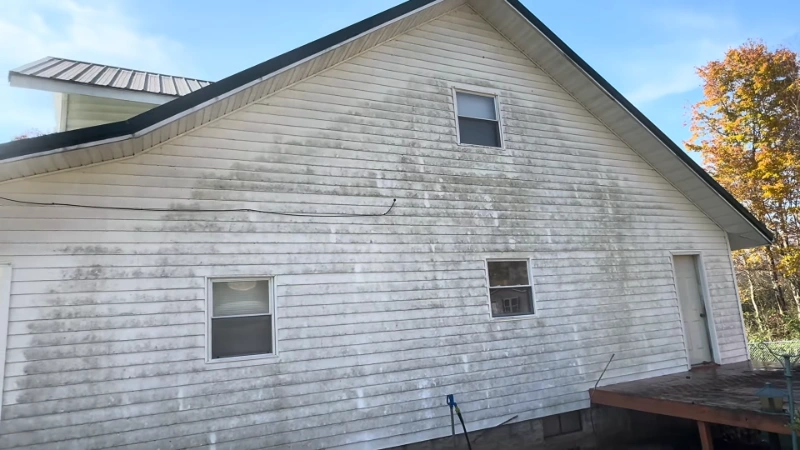
Walk around the north side of your house. If you see dark streaking down the siding, green fuzz creeping across the brick, or a general grey-brown film that wasn’t there three years ago — that’s not just dirt. That’s mold, algae, and biological growth feeding on your exterior surfaces.
Lexington’s climate makes this nearly unavoidable. We sit in a humid subtropical zone with summer humidity regularly topping 70%, annual rainfall spread across all 12 months, and thick tree canopy in older neighborhoods like Chevy Chase, Kenwick, and Ashland Park. Add in the pollen season that dumps a fresh coat on every surface each spring, and your home’s exterior is under constant biological assault from the moment it’s built.
Here’s the part that surprises most homeowners: pressure washing with just water makes the problem worse. Water alone doesn’t kill the organisms. It knocks off the surface layer and feeds the mildew left behind. Within weeks, it comes back — often in the same pattern, sometimes worse. We’ve seen homes in Beaumont and Hamburg that were “washed” by the homeowner a few months earlier that looked worse than if they’d never been touched.
The fix isn’t more pressure. It’s the right chemistry.
How We Wash Lexington Homes
We use a soft wash process — the same method recommended by roofing manufacturers, vinyl siding associations, and every professional operator who’s been doing this seriously for more than a few years.
Pre-rinse and surface inspection
Before we apply anything, we walk the property. We’re looking at surface types, checking for compromised caulking or mortar joints on brick, flagging anything that needs special care (delicate window screens, plants close to the foundation, painted wood trim). We also note which sides of your home face north — those accumulate the most growth and may need extra dwell time.
Downstream application of biodegradable cleaning solution
We apply a low-concentration sodium hypochlorite solution mixed with surfactant using downstream injection — meaning it’s applied at very low pressure (100 PSI or less on siding and painted surfaces). The surfactant helps the solution cling to vertical surfaces instead of running off immediately. The sodium hypochlorite is what actually kills the mold, mildew, algae, and lichen at the cellular level.
Dwell time — letting the soap do its job
This is the step most DIYers skip entirely and what separates a professional soft wash from a garden-hose rinse-off. The cleaning solution needs 5–10 minutes of contact time to fully neutralize organic growth. Rush this step and you’re just moving dirt around.
Low-pressure rinse
Once the dwell time is complete, we rinse thoroughly. What you see rinsing off is dead algae, neutralized mold spores, and years of accumulated organic matter. The difference is visible even before the surface dries.
Optional post-treatment
On surfaces with severe lichen growth — common on north-facing brick in older Lexington neighborhoods like Kenwick and Chevy Chase — we may apply a secondary treatment. Lichen roots into mortar joints and doesn’t release immediately. A properly applied secondary application softens the biology; the dead lichen flakes and falls off over the following days. This is not a defect in the job — it’s exactly how lichen removal works.
What Surfaces We Clean
House washing isn’t just siding. A complete house wash covers:
Vinyl siding
The most common exterior in Hamburg, Beaumont, and Masterson Station’s newer builds. Vinyl holds algae and mold particularly well on north-facing runs. Soft wash cleans it thoroughly without warping, discoloring, or forcing water behind panels.
Brick
Lexington has acres of brick — from the 1920s Craftsman bungalows in Kenwick to the colonial-style homes along the Chevy Chase corridors. Brick is porous and holds lichen, efflorescence (white mineral deposits), and algae. It requires a knowledgeable touch — too much pressure strips mortar joints.
Stucco and EIFS (Dryvit)
Common on higher-end homes in Deerfield and Idle Hour. Stucco is unforgiving with high pressure — a single wand pass at 2,500 PSI can etch the surface permanently. We keep pressure below 500 PSI on stucco.
Painted wood siding
Found on many of Ashland Park’s historic properties near the Henry Clay Estate. Painted surfaces need low pressure to avoid peeling and lifting, with appropriate chemistry that won’t strip the paint layer.
Fascia, soffits, and trim
The parts most operators skip. We clean the full envelope of the home — gutters, fascia boards, window trim, door surrounds. These areas trap the most debris and are most visible at eye level.
Covered and screened porches
This is a problem Lexington has in abundance. Covered porches trap humidity differently than open exterior surfaces. Moisture sits in the floor-to-ceiling cavity, and mold colonizes aggressively — especially on wood decking and porch ceilings. If your covered porch ceiling is clean but the floor is covered in a dark carpet of mold, you’re not imagining things — it’s a real pattern we see constantly in this climate.
Why North-Facing Walls Are Always the Worst
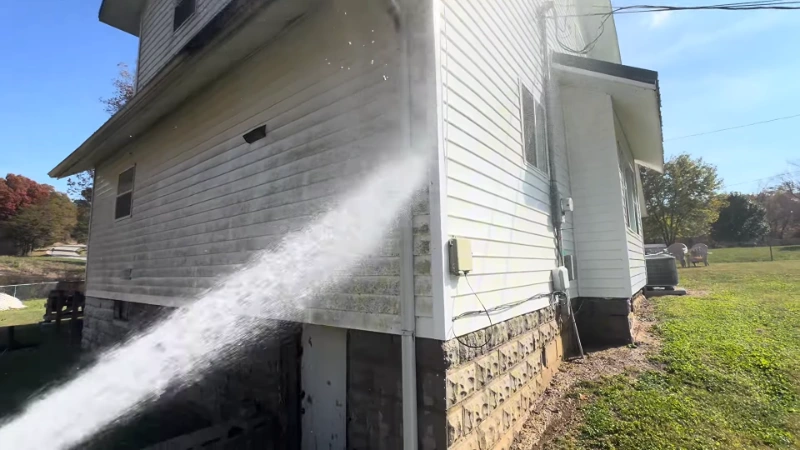
If one side of your home looks dramatically worse than the others, it’s almost certainly the north side. Here’s why this matters in Lexington specifically:
North-facing surfaces get minimal direct sunlight. They stay damp longer after rain. They don’t dry out between wet periods the way south-facing walls do. Combined with Lexington’s annual rainfall average of around 45 inches distributed across all 12 months, north-facing surfaces are essentially in a permanent semi-moist environment that’s ideal for algae, mold, and lichen growth.
We factor this into every job. North walls often need longer chemical dwell time and may need a double application to fully address heavy biological loading. If you’ve had your home washed and the north side came back green within a year, it wasn’t necessarily a bad job — it may have just been under-treated the first time. Many homeowners pair this with window cleaning so the whole exterior is cleaned in one visit.
How Much Does House Washing Cost in Lexington, KY?
Most Lexington homes run between $250 and $550 for a full exterior house wash, depending on:
- Square footage and story count — a 1,500 sq ft single-story home costs less to treat than a 3,000 sq ft two-story
- Surface type — vinyl is faster to treat than brick or stucco
- Degree of biological loading — a home that hasn’t been washed in 5 years takes longer than one on an annual schedule
- Coverage area — porches, detached garages, fencing, and additional structures add to the quote
Signs Your Home Is Overdue for a Wash
You don’t need to see a wall covered in green to need a house wash. Watch for:
- Black or dark streaking down siding, especially from roof level
- A general grey or brown tone to surfaces that used to look white or beige
- Green or yellow-green fuzz in shaded areas, particularly on the north side
- White chalky residue (efflorescence) on brick, indicating water migration through mortar
- Mildew smell after rain when you’re near the foundation or siding
- Discoloration around window wells or along the bottom courses of siding
Most Lexington homeowners find once a year is about right. Homes under heavy tree canopy — especially with oak or Bradford pear trees — often benefit from twice yearly cleaning in spring and fall.
Does House Washing Increase Home Value?
It’s one of the highest-ROI things you can do before listing. Real estate agents in Lexington routinely recommend a house wash as one of the first steps in pre-listing prep. Here’s why it matters: buyers form impressions from the curb before they ever step inside. A home with green-grey siding and black-streaked brick signals neglect — even if the interior is immaculate.
A clean exterior costs $300–$500. The curb-appeal improvement is immediate and visible. For a home at Lexington’s median value of $333,000, that’s a fraction of a percent to make the first impression competitive. To dig deeper, see our guides on how algae, mold, and mildew differ on Lexington homes and the difference between soft washing and pressure washing.
Frequently Asked Questions
Straight answers about soft washing, safety, and timing for Lexington homes.
Still have a question?
Call or text and we will answer it straight, no pressure.
Call or Text: (859) 445-2910What’s the difference between pressure washing and soft washing for house exteriors?
Pressure washing uses high-pressure water (1,500–4,000 PSI) to blast surface dirt away. Soft washing uses a low-pressure application (under 500 PSI on most surfaces, 100 PSI or less on siding) combined with a biodegradable cleaning solution. The chemical kills mold, mildew, and algae at the cellular level — pressure washing just moves surface matter around and often feeds remaining organisms. For house exteriors, soft washing is safer, more effective, and produces results that last significantly longer.
Can you soft wash vinyl siding without voiding the manufacturer warranty?
Most major vinyl siding manufacturers — including CertainTeed and Alside — specifically recommend soft washing over pressure washing. High-pressure washing can force water behind the panels, void warranty claims, and in some cases cause warping or discoloration. Our soft wash method operates well below the pressure threshold that concerns most manufacturers.
How long does house washing take?
A typical single-story Lexington home takes 2–4 hours from setup to rinse. A larger two-story with porches, gutters, and additional structures may run 4–6 hours. We’ll give you a time estimate when we quote the job.
Will the chemicals harm my plants or landscaping?
We use biodegradable surfactant-based solutions. We pre-wet surrounding vegetation before applying cleaning solution, and rinse plants down after the job. We’ve cleaned hundreds of homes in Lexington’s older tree-canopy neighborhoods — Chevy Chase, Kenwick, Ashland Park — without plant damage from proper application. We’ll walk the property with you beforehand and flag anything that needs extra protection.
How soon will results be visible?
Results are visible almost immediately on most surfaces. Some north-facing or heavily lichen-laden areas may look slightly grey for a day or two as dead biological matter dries and begins flaking. By 72 hours, the surface should be visibly cleaner. In some lichen situations, the full result develops over 7–14 days as dead lichen naturally detaches.
Do I need to be home during the house wash?
No. We just need access to an outdoor water spigot. We’ll confirm the access point when we schedule. If you have specific concerns about certain areas — a fragile flower bed, a recently stained fence, plants that need extra rinsing — flag them when you book and we’ll address them in the job notes.
How often should I wash my house in Lexington?
Once a year is the standard recommendation for most Lexington homes. Homes in heavy tree canopy (oak, Bradford pear, maple) or with significant north-facing exposure often benefit from a spring and fall schedule. The spring wash handles Lexington’s notorious pollen season deposit; the fall wash removes summer’s biological growth before winter traps it under cold and damp.
Will the black streaks on my brick come back after washing?
Streaking on brick is usually caused by algae, lichen, or efflorescence. Soft washing kills the biology — it doesn’t just move it. With proper treatment and rinse, results on brick typically last 12–24 months in Lexington’s climate. Areas with severe lichen in the mortar joints may show some regrowth sooner if the lichen had deep root penetration, but a properly treated surface will not return to pre-treatment condition within a few months.
We Serve All of Fayette County — and Then Some
We clean homes throughout Lexington-Fayette and Central Kentucky, including:
Neighborhoods
Surrounding areas
ZIP codes served
We regularly wash houses for Tates Creek homes and Hartland homes.
Ready to See the Difference?
If you’ve got green stuff growing on the side of your house, black streaking from the gutters down the siding, or a home that just looks dull and dirty compared to how it looked five years ago — give us a call or shoot us a text. We’ll get out and take a look, give you a straight quote with no surprise numbers, and schedule around your week.
Free written estimates. Same-week scheduling. We show up when we say we will.